What Ernest Solvay teaches us about holding stewardship lightly

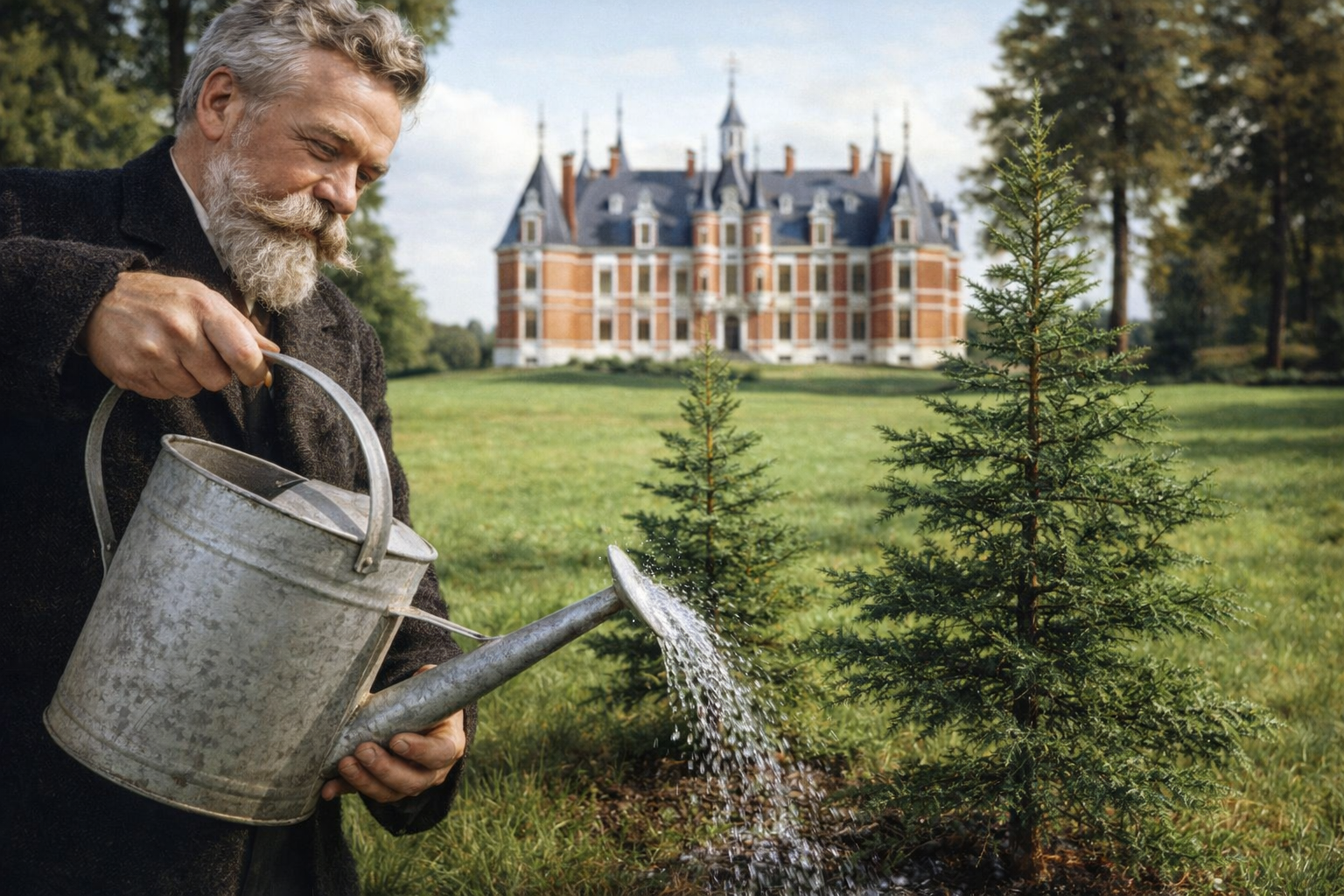
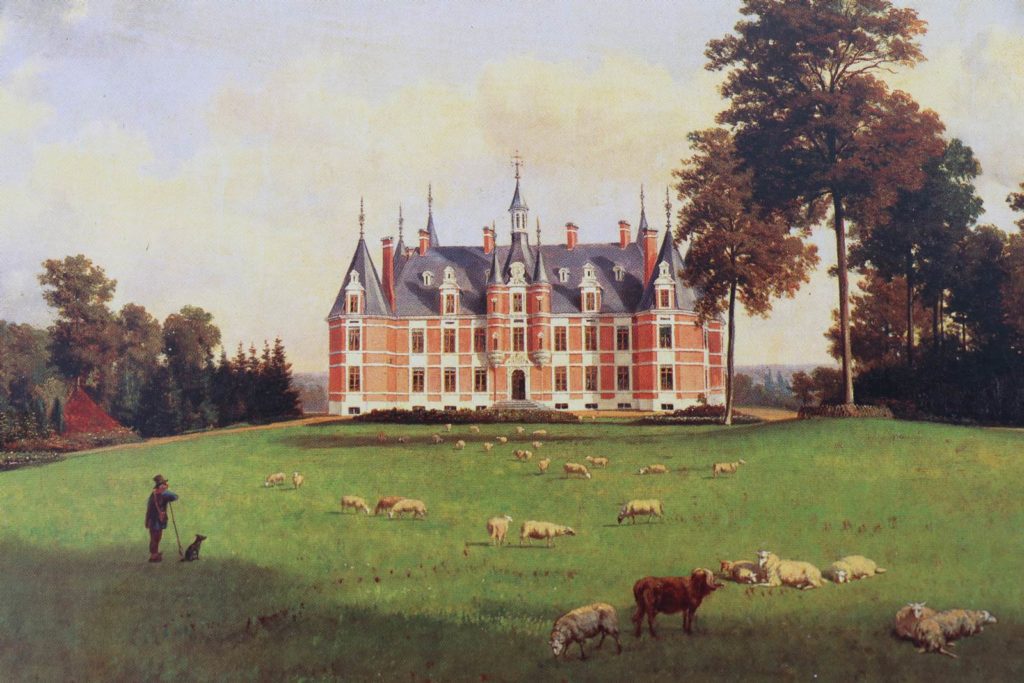
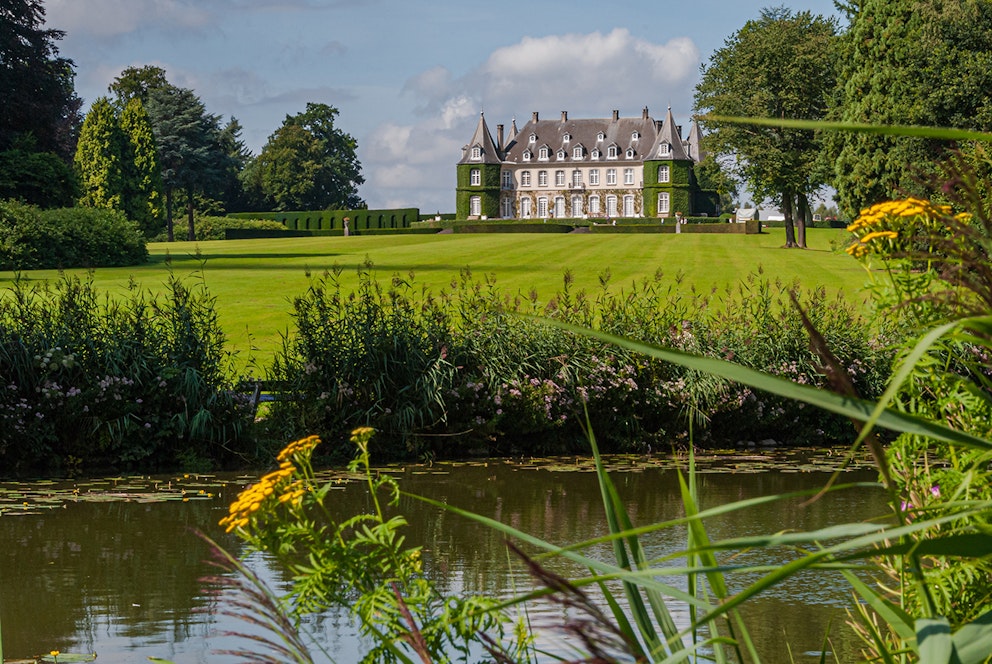
In 1893, Ernest Solvay bought a magnificent estate for his 60th birthday. The domain of La Hulpe, 490 hectares carved from the Sonian Forest, a few kilometers south of Brussels, Belgium. The estate included a neo-Renaissance castle in red brick flanked by four towers and pounds at the base of the hill.
To keep things in balance, he deciced to give every single employee one month of salary per year of seniority. Some had been there for 35 years.
That is 35 months of salary. Given freely, to stay aligned with his values. At a time when other men spent their lives underground in the mines, in winter, seeing daylight only on Sundays.
Then he planted sequoias. Knowing neither he nor his children would ever see them fully grown. He watered them himself when he could.
He walked to his Brussels office regularly. 15 kilometers alone through the forest, at dawn. No car. No entourage.
Those with nothing can't afford to let go, survival demands grip. Those who control ressources often can't either, their identity has become their position.
This isn't a moral observation. It's a structural one. Extreme wealth is a precise trap. It amplifies rewards to a level that makes detachment almost unthinkable. The more conscious you become, the more effective you become at the world's game. The more rewards arrive, the harder it becomes to step back. The trap tightens precisely as you become more capable of springing it.
At the other end, those who are starving are so preoccupied with survival that they cannot afford the luxury of loosening their grip either.
Two extremes. Same predicament. Different causes.
Solvay found a third way. He held his fortune lightly enough to plant trees for strangers not yet born. To fund science he could not control. To give away what he had built before he died, and to do so with conditions — not conditions that protected his ego, but conditions that protected the intention.
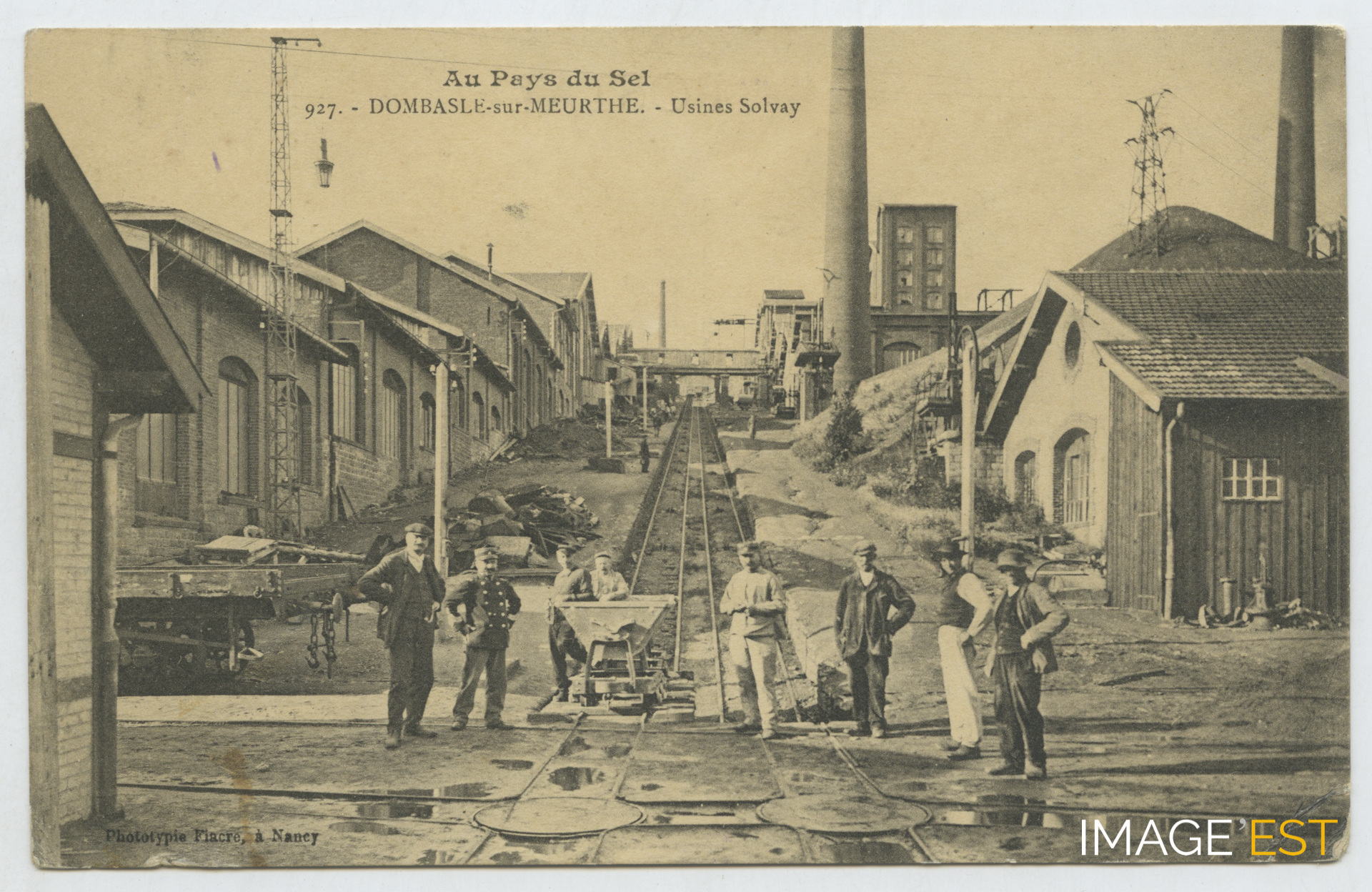
The founding of Solvay & Co in 1863, transforming the global chemical industry with the Solvay process for producing soda ash. The construction of an international empire. The institutes. The networks. The fortune.
The map is well-documented.
The territory is elsewhere.
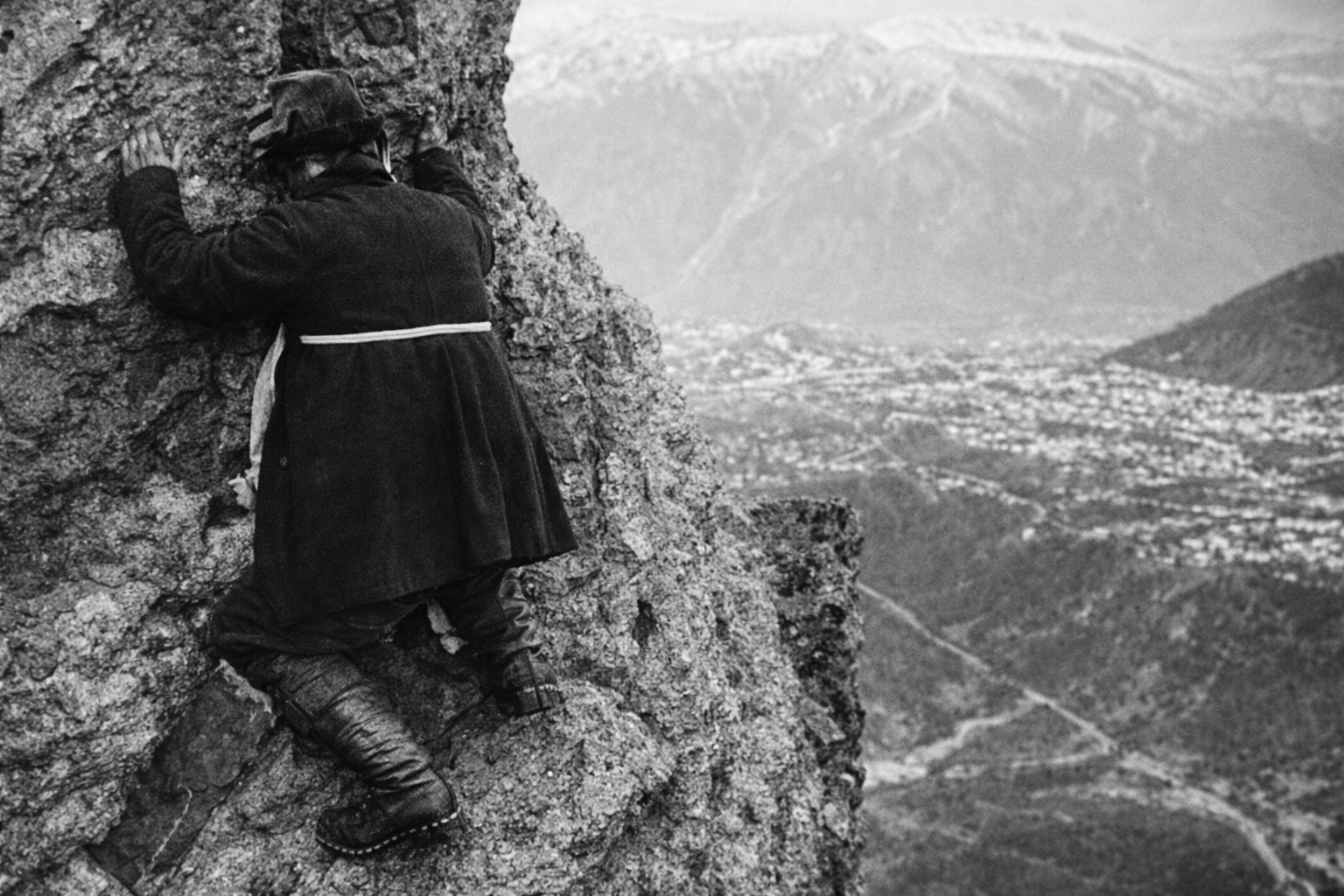
The territory is a man walking alone through the Sonian Forest at dawn, 15 kilometers to his Brussels office. The same man climbing the Matterhorn at age 80 in old boots and a heavy wool coat, not for glory, but because the mountain was there and the body could still do it.
And funding the Solvay Hut.
Perched on a ledge above a ravine on the Hörnli ridge, at 4,300 meters altitude, the Solvay Hut is one of the most dangerous shelters in the Alps. A few dozen centimeters separate its entrance from the void. It is not accessible to casual hikers. It exists for one reason: so that alpinists in distress on the Matterhorn have somewhere to survive the night.
Solvay built it for people he would never meet, facing a situation he hoped they would never face.
Ernest Solvay financed the first Solvay Conference on Physics, held at the Hôtel Métropole in Brussels from October 30 to November 3. The theme: The Theory of Radiation and Quanta.
He gathered the greatest scientific minds of the era, Lorentz, Planck, Einstein, Curie, Rutherford, Poincaré, and gave them a question, a room, and the freedom to disagree. He did not demand credit for what would emerge. He did not seek to steer the conclusions.
What emerged was the intellectual architecture of quantum mechanics. The Solvay Conferences, held every three years since, became the crucible in which modern physics was forged. For decades, Marie Curie was the only woman to have participated. The 1927 conference produced the famous debates between Einstein and Bohr that still define how we think about the nature of reality.
None of this was planned. It was enabled.
Solvay understood something that most philanthropists do not: the highest form of investment is the one where you fund the conditions for breakthrough without controlling the breakthrough itself. He created the container. He stepped back. He let the intelligence of others fill it.
He funded ideas he didn't fully understand. He watered trees he would never see grow. He walked alone at dawn through a forest he owned without ever behaving as though he owned it.
.jpg)
Belgium was occupied. The population faced starvation. Ernest Solvay, together with Émile Francqui, organized and largely financed what became the Commission for Relief in Belgium — one of the largest humanitarian operations in history at that point. The equivalent of 250 to 320 million euros in today's terms, used to feed an occupied nation.
Not a donation to a foundation. Not a check written from a distance. A direct, personal, organized act of responsibility toward a country he considered his.
Ernest Solvay did not wait for death to transmit. He gave his assets to his children during his lifetime. The domain of La Hulpe was divided between his two sons, Edmond received the northern part, Armand received the château and the lower section. Armand's son, Ernest-John, continued the work: significant landscaping, a belvedere reached by 140 steps, a formal French garden, an 800-meter grassed clearing through the forest ending in a 36-meter obelisk crowned with a golden sun.
.webp)
Ernest-John was preoccupied by one thing above all: the risk of future parceling. So he obtained the estate's protected classification in 1963, and a few years later donated it entirely to the Belgian state — on the explicit condition that it be maintained in its integrity and used to promote cultural encounters.
After his death in 1972, the domain became accessible to the general public. 227 hectares. Open.
Seven generations now. One intention. Not dissolved.
Today, more than a thousand Solvay descendants are bound together in a family grouping. Shares can't be sold, only exchanged within the family. This isn't a legal constraint reluctantly endured, it's the deliberate architecture of a transmitted intention. The family is large enough that it has long since ceased to be held together by affection alone. It's held together by structure and by a story about what bloodline and legacy means.
The map without the territory produces heirs who administrate. Who optimize. Who protect the capital without understanding why it was built, or what it was built for. Who mistake stewardship for management.
The territory without the map produces visions that disperse by the next generation. Beautiful intentions with no container to hold them. Wealth that fragments because no architecture was ever built to transmit the purpose alongside the assets.
Solvay had both. And he had something rarer still: the capacity to hold the whole thing lightly. To not confuse possession with identity. To understand that what you hold was never entirely yours — and that this changes everything about how you hold it.
He climbed the Matterhorn in old boots and a wool coat while owning one of the great industrial fortunes of Europe. He watered his sequoias himself. He walked alone through the forest at dawn. He funded the birth of quantum physics and asked for nothing in return.
He knew it wasn't his forest. It was his turn to take care of it.
Not wealth management. Not governance frameworks. Not succession planning.
The understanding that what you hold was entrusted to you — by circumstance, by history, by the labor of those who came before — and that your role is not to possess it but to transmit it, ideally larger and more alive than you received it.
Ernest Solvay is probably the most powerful example we have encountered of what stewardship, legacy, and bloodline coherence actually look like when they are lived rather than managed.
He planted sequoias. He funded quantum mechanics. He fed an occupied nation. He built a hut on a ledge above a void so strangers could survive the night.
And every morning, he walked alone through the forest.
That was his map. That was his territory. They were the same thing.
The man of the future will be dedicated to individualism
Ernest Solvay
.jpg)
We have organized meditations at the Château de La Hulpe, on the very grounds Ernest Solvay planted his sequoias. With teacher from the Heartfulness lineage. In the forest he walked at dawn.
Ernest Solvay isn't a historical reference for CURANS. He's a source of inspirataion. The vision of what it means to hold a bloodline with intention, to fund what you can't control, to transmit purpose alongside assets, this is what CURANS was built around.
He showed that it was possible. That the map and the territory could be the same thing.
That is what we're building toward.


The operating system for stewardship. Supporting clarity, coherence, and coordination across complex governance and long-term decision contexts.
⊕ Swiss Jurisdiction · Zurich

