Why systemic risk, planetary coupling, and new coordination models redefine stewardship, capital allocation, and long horizon governance.

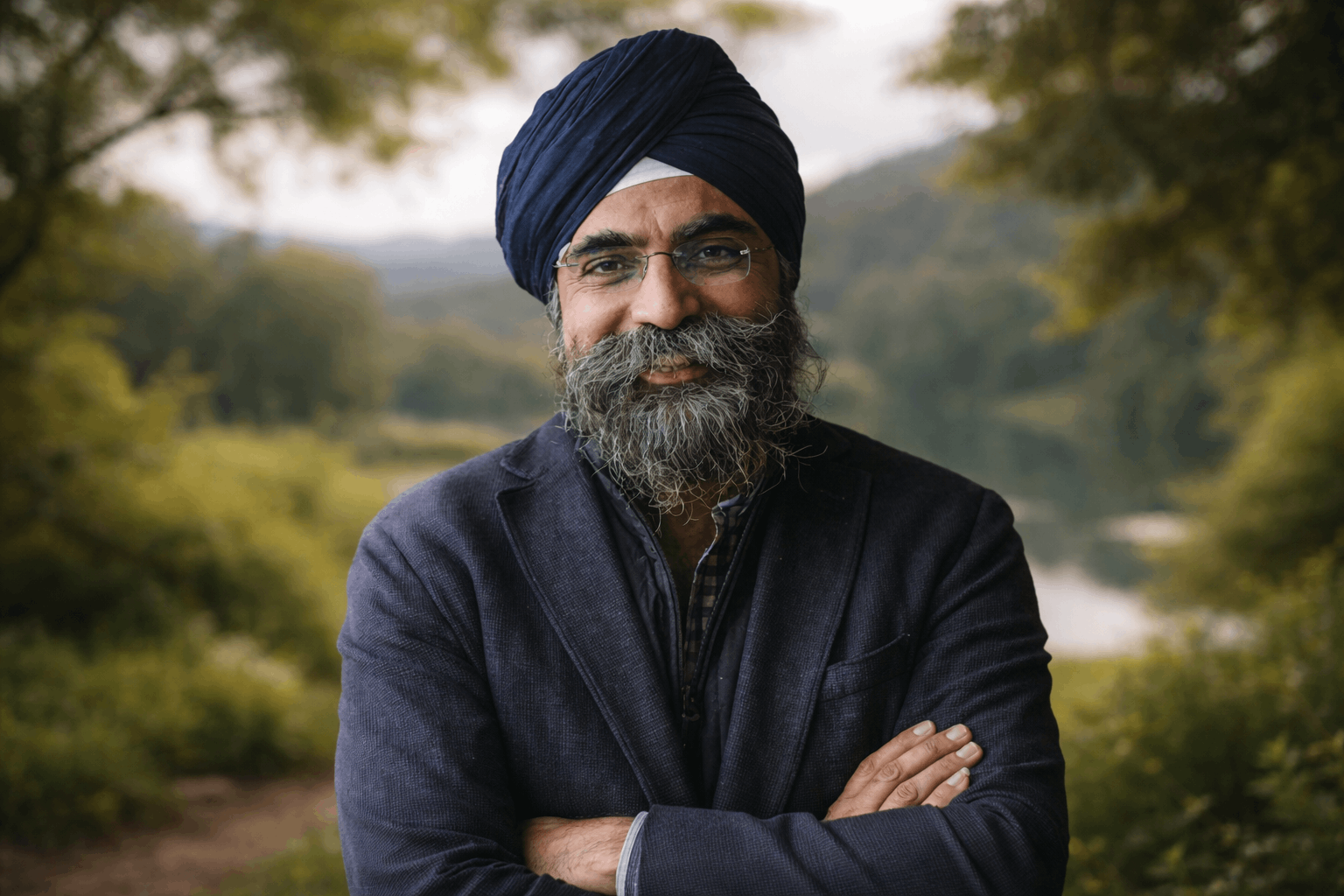
Indy Johar’s Long Now talk offers a pragmatic lens for the decade ahead: the defining challenge is less the arrival of specific “end states” and more the volatility between now and whatever stabilizes. In his framing, the world enters a period of systemic degenerative volatility driven by climate breakdown, ecological degradation, and the power race around general purpose technologies.
For NextGens and Family Offices, the takeaway is operational: portfolios, governance, and decision systems built for a relatively stable world now face cascading risks across food, energy, water, cities, and social cohesion. The strategic response becomes the expansion of “optionality”: increasing the set of viable futures available under uncertainty.
Johar insists on the difference between gradual change and breakdown. The threat is the loss of predictable patterns and the whiplash period of instability that comes before any new equilibrium. Volatility, in his view, drives second order effects that become first order realities: food prices, inequality, migration pressure, political polarization, and the erosion of social contracts.
A simple example he points to is cascade logic: a localized shock can propagate across supply chains and geopolitics. This matters because it reframes risk. The relevant question for capital is less “what happens in 2050?” and more “how fast do cascades destabilize the foundations we rely on?”
Johar argues that decoupling strategies break under modern interdependence. Even a basic object like a toaster relies on planetary supply chains. Add medical supplies, microchips, fertilizers, and energy systems, and the idea of insulated safety becomes structurally weak. Wealth remains entangled with planetary stability, whether acknowledged or not.
His message is direct: in a coupled world, isolated resilience has diminishing returns. Stability becomes a shared project.
Johar offers an unusual but useful reframing. He treats the “Blue Marble” moment as the planet becoming self aware. Humans, machines, and ecosystems become one integrated intelligence layer. The objective becomes preserving and expanding the optionality of that system rather than preserving a narrow “minimal viable continuity” of civilization.
For NextGens, this lands as a mandate: stewardship becomes the work of protecting the conditions that allow complex life and complex societies to keep learning.
A major practical claim follows: conservation no longer covers the requirements of the coming decades. Ecological zones will shift faster than evolution adapts, and the institutional posture of “protect a boundary and let nature recover” becomes insufficient at scale.
Johar’s emphasis moves toward regeneration and transformation of foundational systems. He repeatedly comes back to the same base layer priorities:
Soil and nutrition security
Water continuity and watershed stability
Energy stability
Urban cooling and livability
Biointegrity and biodiversity
Cognitive security and shared decision making capacity
His point is to narrow focus away from consumer optionality and toward civilizational foundations.
Johar’s most actionable argument for capital allocators is organizational. Many of the problems that define the next decades do not behave like single product opportunities.
Cooling a city is a portfolio of interventions. Stabilizing a watershed is a portfolio of interventions. Rebuilding food systems is a portfolio of interventions. These require many to many coordination across entrepreneurs, public actors, insurers, scientists, operators, and financiers.
He introduces the need for new “executions,” meaning new organizing forms that can:
Pool risk and liability across many actors
Coordinate multi point interventions against clear outcome targets
Finance and govern long horizon infrastructure
Build legitimacy and decision capacity under uncertainty
This is where he challenges the default Silicon Valley pattern: the startup model alone does not match the shape of these problems. The moment calls for new institutional wrappers that can orchestrate portfolios of actions.
Johar draws a sharp distinction between instruction based organizations and learning based organizations. In complex environments, learning expands the surface area of what a system can absorb and coordinate.
In this view, the future CEO becomes a Chief Learning Officer. This is less metaphor than operating principle: organizations that learn fast enough can navigate volatility without collapsing into brittle control structures.
He ties this to a behavioral posture: partial knowing. The only honest stance in complexity is acknowledging incomplete knowledge, which then demands curiosity, iteration, and adaptation. Conversation becomes an intelligence unit. Not opinion, but the capacity to update through exchange, sensing, and feedback.
Johar’s framing gives NextGens a concrete role beyond values signaling.
First, adopt a systems worldview. Optionality becomes the strategic objective, because it keeps futures open under uncertainty.
Second, treat stewardship as enlightened self interest. If wealth is coupled to the planet, then regenerating foundations protects the family’s long horizon continuity.
Third, invest in capability, not only assets. The scarce resource becomes decision quality and coordination capacity under volatility. NextGens can lead this shift inside family systems where legacy governance often lags the external reality.
For Family Offices, the talk reframes both risk and opportunity.
Risk becomes external, systemic, and cascading. Traditional portfolio risk management remains necessary while becoming insufficient on its own. The stability of the surrounding system starts to dominate portfolio outcomes.
Opportunity appears as an arbitrage: markets often misprice foundational risks because institutions are structurally slow to update. Johar’s provocation is blunt: the numbers already exist. The gap is worldview, governance, and institutional constraints.
In practice, he points to stability premiums. Continuity of water, energy, and nutrition becomes more valuable as volatility increases. Investments that secure continuity can generate both real world resilience and financial durability.
Curans sits directly inside the gap Johar describes: the room where governance, alignment, and decision making determines whether long horizon strategies hold under pressure.
As volatility rises, the differentiator for NextGens and Family Offices becomes the capacity to reduce emotional noise, sense risk together, and coordinate action across stakeholders and time horizons. Optionality expands when governance works.
Johar’s closing fork is the simplest summary: the decade ahead offers a binary trajectory that behaves like a structural constraint, mutually assured destruction or mutually assured thriving. The practical work is building the organizing forms, coordination infrastructures, and learning systems that make thriving the dominant path.

The operating system for stewardship. Supporting clarity, coherence, and coordination across complex governance and long-term decision contexts.
⊕ Swiss Jurisdiction · Zurich

